
What to Do If Your Landlord Withholds Your Security Deposit A Step-by-Step Guide to Recover Your Money the Smart Way
Blog post description.
1/1/20264 min read

What to Do If Your Landlord Withholds Your Security Deposit
A Step-by-Step Guide to Recover Your Money the Smart Way
You moved out.
You cleaned.
You returned the keys.
And then it happens: your security deposit is partially—or completely—missing.
For many renters, this is where the process ends. They get frustrated, feel powerless, and move on. Landlords know this, and in many cases, they rely on it.
But here’s the truth:
A landlord withholding your security deposit is not the end of the story. It’s the beginning of a process—and renters who understand that process often get their money back.
This guide explains exactly what to do if your landlord withholds your security deposit in the USA, step by step, calmly, and effectively.
First: Don’t Panic and Don’t React Emotionally
The worst thing you can do is react immediately with anger or accusations.
Emotional responses:
Reduce your credibility
Escalate conflict too early
Push landlords into a defensive posture
Landlords deal with disputes regularly. They respond far better to organized, professional renters with evidence than to frustrated ones.
Your goal is not to vent.
Your goal is to recover your money.
Step 1: Check the Legal Deadline in Your State
Before anything else, confirm how long your landlord has to return your deposit or send an itemized statement.
In most U.S. states, this is:
14 days
21 days
30 days
The clock usually starts when:
You return the keys, or
You vacate the unit (depending on state law)
If the landlord missed the deadline, this alone may invalidate deductions or entitle you to penalties.
Many renters never check this—and lose leverage instantly.
Step 2: Review the Itemized Statement Line by Line
If you received an itemized list, don’t skim it. Analyze it.
Ask these questions for each charge:
Is this wear and tear or damage?
Is the description specific or vague?
Is the amount reasonable?
Is this allowed by the lease?
Is this supported by documentation or receipts?
Was the work necessary to re-rent the unit?
Vague charges like “general cleaning” or “maintenance labor” deserve extra scrutiny.
Step 3: Compare Deductions With Your Documentation
This is where preparation pays off.
Pull out:
Your move-out photos
Your video walkthrough
Cleaning or repair receipts
Move-in documentation (if available)
Look for direct contradictions:
Clean appliances vs. cleaning charges
Undamaged walls vs. repair fees
No odors vs. deodorizing charges
If your documentation clearly conflicts with the landlord’s claims, you have leverage.
Step 4: Identify Which Charges Are Worth Disputing
You don’t need to dispute everything.
Strong disputes focus on:
Clearly unfair charges
Normal wear and tear labeled as damage
Fees not mentioned in the lease
Charges without explanation or receipts
Deductions contradicted by photos
Weak disputes (minor or ambiguous charges) may not be worth the time unless they add up.
Focus = strength.
Step 5: Send a Professional Dispute Email
Your first response sets the tone.
A strong dispute email:
Is calm and factual
References specific charges
Mentions documentation without overwhelming
Requests clarification or correction
Example approach (not aggressive, not passive):
“I reviewed the itemized statement and have questions about specific charges that appear inconsistent with the documented condition of the unit at move-out.”
This signals awareness and preparedness—without threatening.
Step 6: Share Evidence Strategically
Do not immediately send dozens of photos.
Instead:
Reference that you documented the unit
Provide evidence only if requested or if the dispute escalates
Match each photo to a specific charge
When you do send photos:
Label them clearly
Keep explanations brief
Let the evidence speak
Precision beats volume.
Step 7: Understand Why Landlords Often Back Down
Many landlords:
Use automated or standard deductions
Inflate charges expecting no resistance
Rely on renter fatigue
When a renter responds calmly with evidence and legal awareness, the cost-benefit calculation changes.
Reducing or reversing a charge becomes easier than escalating the dispute.
This is why many disputes resolve at this stage.
Step 8: Follow Up if You Don’t Get a Response
Silence does not mean refusal.
If there’s no response after 7–10 days:
Send a brief follow-up
Reference your previous message
Maintain a professional tone
Persistence matters—but tone matters more.
Step 9: Escalate Only When Necessary
If informal communication fails, escalation is appropriate.
Common escalation options include:
A formal demand letter
Filing a complaint with a local housing authority
Mediation (in some states)
Small claims court
Escalation should be deliberate, not emotional.
When a Formal Demand Letter Makes Sense
A demand letter is appropriate if:
The landlord missed the legal deadline
Charges are clearly improper
Informal attempts failed
A good demand letter:
References state law
States the amount owed
Sets a clear deadline
This often prompts action without court.
Small Claims Court: What Renters Should Know
Small claims court is designed for situations like this.
It works best when:
The amount is meaningful
Documentation is strong
The law is clearly on your side
Many cases settle before a hearing once landlords realize the renter is prepared.
Mistakes Renters Make During Deposit Disputes
Avoid these common errors:
Threatening immediately
Arguing emotionally
Sending disorganized evidence
Missing deadlines yourself
Accepting deductions without understanding them
Credibility is everything in disputes.
Can Cashing a Partial Refund Waive Your Rights?
This depends on your state and the wording provided.
Before depositing a partial refund:
Read all accompanying language
Look for “payment in full” terms
Research local rules
When in doubt, seek clarification before cashing.
Why Many Renters Give Up Too Early
After moving, renters are:
Busy
Tired
Focused on the next step
Landlords know this.
They don’t need to “win” every dispute—just enough of them.
Renters who stay engaged, even briefly, often recover money others leave behind.
How a System Changes Deposit Disputes
Most renters improvise disputes.
Prepared renters:
Follow a process
Use templates
Reference documentation
Track deadlines
That structure removes emotion and increases results.
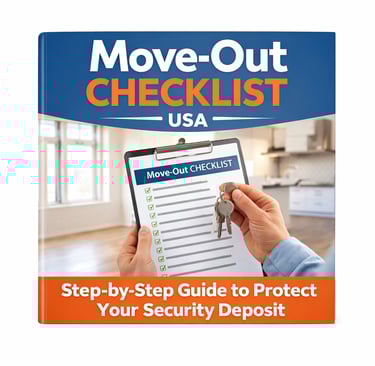
The Move-Out Checklist USA eBook includes ready-to-use dispute email templates, demand letter scripts, and documentation guidelines designed specifically for these situations—so renters don’t have to guess what to say or when to escalate.
Many renters recover more money than the guide costs with a single well-handled dispute.
Final Takeaway
If your landlord withholds your security deposit, it doesn’t mean you’ve lost.
It means the process has entered a new phase.
When you respond calmly, strategically, and with evidence, outcomes change.
Security deposit disputes aren’t won by arguing.
They’re won by preparation, documentation, and timing.
And renters who understand that often get their money back.https://moveoutchecklistusa.com/move-out-checklist-usa-guide
Help
Questions? Reach out anytime.
Contact
infoebookusa@aol.com
© 2026. All rights reserved.