
Small Claims Court and Security Deposits
Blog post description.
1/5/20263 min read

Small Claims Court and Security Deposits
When Renters Should Sue, What to Expect, and How to Win
For most renters, the idea of going to court over a security deposit sounds extreme.
It’s not.
In fact, small claims court exists precisely for situations like security deposit disputes—where the amount matters, the facts are clear, and one side failed to follow the rules.
This guide explains when small claims court makes sense for renters, how the process actually works in the United States, what judges look for, and how prepared renters dramatically increase their chances of winning.
Why Small Claims Court Is Designed for Renters
Small claims court was created to:
Resolve disputes quickly
Avoid expensive lawyers
Focus on facts and evidence
Be accessible to individuals
Security deposit disputes are one of the most common cases in small claims courts across the U.S.
You don’t need to be aggressive.
You need to be organized.
When Small Claims Court Is Worth It
Not every dispute belongs in court.
Small claims court is usually worth considering when:
The amount withheld is meaningful to you
The landlord missed legal deadlines
Charges are clearly improper or unsupported
You have strong documentation
Informal attempts failed
Many renters wait too long out of fear—then realize later they had a strong case.
When It’s Probably Not Worth It
Court may not be the best option when:
The amount is very small
The damage is obvious and documented
The lease clearly supports the charge
Your documentation is weak
Strategic renters choose court as a tool, not an emotional reaction.
Why the Threat of Court Often Works
Here’s something many renters don’t realize:
You don’t always have to go to court to benefit from being ready to go.
Once landlords realize:
You know deadlines
You have documentation
You understand the process
They often prefer to settle.
Court is inconvenient, time-consuming, and risky for landlords—especially when deadlines were missed.
What Judges Care About (And What They Don’t)
Judges in small claims court focus on:
Timelines
Written evidence
Photos and videos
Lease terms
Compliance with state law
They do not care about:
Emotions
Verbal promises
“It didn’t feel fair” arguments
Long explanations without proof
Facts beat opinions—every time.
The Importance of Deadlines in Court
Deadlines are one of the strongest renter advantages.
If the landlord:
Missed the deposit return deadline
Sent an incomplete itemized statement
Failed to provide required receipts
Judges often view the case very differently.
This is why renters who track deadlines have a significant edge.
What Evidence Renters Should Bring
Strong cases are simple and focused.
Bring:
Your lease
Proof of move-out date and key return
Move-out photos and videos
Cleaning and repair receipts
The landlord’s itemized statement
Written communication
Proof of missed deadlines (if applicable)
Do not overwhelm the judge.
Organize evidence clearly and logically.
How Renters Typically Win in Court
Winning cases usually follow this pattern:
The renter shows they followed the lease
The renter shows the unit’s condition at move-out
The renter shows improper charges or missed deadlines
The renter stays calm and factual
Many judges are familiar with landlords who routinely push the limits.
Prepared renters stand out immediately.
What Landlords Often Do Wrong in Court
Common landlord mistakes include:
Missing deadlines
Providing vague statements
Overcharging for wear and tear
Charging full replacement for old items
Lacking receipts or proof
When renters expose these issues clearly, outcomes shift.
The Role of Demand Letters Before Court
Courts often expect renters to try resolving disputes first.
A formal demand letter:
Shows good faith
Documents your attempt to resolve
Signals seriousness
Many landlords respond once they realize court is the next step.
What the Small Claims Process Looks Like
While details vary by state, the process is usually:
File a claim
Pay a small filing fee
Serve the landlord
Attend a short hearing
Present evidence
Receive a decision
Cases are often resolved in minutes—not hours.
Why Renters Fear Court (And Why They Shouldn’t)
Renters fear:
Complexity
Public speaking
Retaliation
Losing
But small claims court is informal, focused, and structured.
Judges guide the process.
Preparation matters far more than confidence.
Why Many Cases Settle Before the Hearing
Once a case is filed:
The risk becomes real
Costs increase for the landlord
The outcome becomes uncertain
This is why many landlords settle before court—even when they didn’t respond earlier.
What Happens If You Win
If you win, the court may:
Order the deposit returned
Award additional damages (in some states)
Require payment within a set time
Winning isn’t the end—but it’s a powerful position.
What Happens If You Lose
If you lose:
You usually owe nothing additional
You gain clarity and closure
But prepared renters lose far less often than they expect.
The Most Common Court Mistake Renters Make
Trying to argue everything.
Strong cases focus on:
Clear violations
Missed deadlines
Unsupported charges
Simplicity wins.
Why Preparation Before Move-Out Still Matters Most
Court outcomes are often decided before disputes begin.
Renters who:
Clean properly
Document thoroughly
Track deadlines
Rarely need court.
Court is a last resort—not a strategy.
How a Checklist Makes Court Almost Unnecessary
Most renters who follow a structured move-out system never reach court.
And those who do:
Arrive prepared
Know what to present
Control the narrative
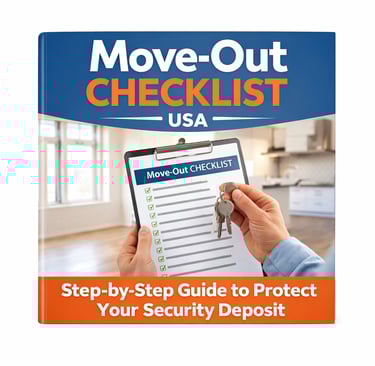
The Move-Out Checklist USA eBook is designed to prevent disputes—and support renters if disputes escalate—by providing documentation rules, deadline tracking, and ready-to-use demand letter templates.
Many renters avoid court entirely simply by following the process once.
Final Takeaway
Small claims court is not extreme.
It’s a tool.
Used strategically, it:
Shifts leverage
Encourages settlement
Protects your money
Renters who understand when—and how—to use it are no longer powerless.
Security deposit disputes aren’t about being aggressive.
They’re about being prepared.
And preparation always wins.https://moveoutchecklistusa.com/move-out-checklist-usa-guide
Help
Questions? Reach out anytime.
Contact
infoebookusa@aol.com
© 2026. All rights reserved.