
How to Move Out of an Apartment Without Stress
Blog post description.
1/9/20263 min read
How to Move Out of an Apartment Without Stress
The Exact Process Renters Use to Get Their Deposit Back
Most renters believe that moving out is stressful by nature.
It isn’t.
Stress comes from uncertainty, rushing, and not knowing what matters. When renters follow a clear, structured process, moving out becomes predictable—and security deposits stop feeling like a gamble.
This article explains how to move out of an apartment in the USA with minimal stress and maximum deposit protection, using the same process that prepared renters rely on every time.
Why Most Move-Out Stress Is Self-Inflicted
Stress isn’t caused by landlords.
It’s caused by:
Last-minute decisions
Guesswork
Unclear priorities
Missed deadlines
When renters don’t know what inspectors care about, everything feels urgent.
Structure removes urgency.
The Mental Shift That Changes Everything
Stressful renters ask:
“Will this be a problem?”
Prepared renters ask:
“Is this on the checklist?”
That shift replaces anxiety with certainty.
Moving out stops being emotional—and becomes procedural.
Phase 1: Prepare Early (30 Days Before Move-Out)
This phase eliminates most stress before it exists.
Prepared renters:
Review the lease
Note cleaning and repair obligations
Identify professional cleaning requirements
Schedule time for repairs
Create a move-out timeline
Most stress comes from discovering requirements too late.
Phase 2: Fix the Cheap, Obvious Issues
Before deep cleaning:
Replace burned-out bulbs
Tighten handles
Fix loose fixtures
Replace missing batteries
Patch only clean, small holes
These fixes cost little but prevent expensive deductions.
Ignoring them creates avoidable stress later.
Phase 3: Deep Clean to Inspection Standards
This is where renters usually underestimate effort.
Stress-free renters clean:
Inside appliances
Cabinet interiors
Baseboards
Window tracks
Bathroom grout and caulking
They clean once, thoroughly—instead of worrying later.
Cleaning early also leaves time to redo missed areas.
Phase 4: Neutralize Odors Completely
Odors create last-minute panic.
Prepared renters:
Clean drains
Empty and sanitize appliances
Ventilate the unit
Avoid heavy fragrances
A neutral-smelling apartment signals readiness and reduces scrutiny.
Phase 5: Document Everything (The Stress Killer)
Documentation removes fear.
Before returning keys:
Photograph every room
Take close-ups of high-risk areas
Record a video walkthrough
Use good lighting
Save originals
Once documentation is done, stress drops sharply.
Nothing else can surprise you.
Phase 6: Stage the Apartment for Inspection
Presentation matters.
Stress-free renters:
Remove all personal items
Leave lights on
Ensure clean sightlines
Empty closets and storage areas
The unit should look neutral, empty, and ready.
Inspectors notice this immediately.
Phase 7: Handle the Inspection Calmly
If present:
Stay polite
Say less
Observe more
Take notes
If not present:
Trust your documentation
Stress-free renters don’t argue—they prepare.
Phase 8: Return Keys the Right Way
Keys control timelines.
Prepared renters:
Document first
Return keys as instructed
Get confirmation if possible
Returning keys incorrectly can reset deadlines and create stress.
Phase 9: Track the Deposit Timeline
Once you move out:
Mark the legal deadline
Monitor mail and email
Save all communication
Stress comes from uncertainty. Timelines remove it.
Phase 10: Respond Strategically, Not Emotionally
If deductions appear:
Review calmly
Compare to documentation
Identify weak charges
Respond professionally
Prepared renters feel confident—not reactive.
Why This Process Works Every Time
This process:
Eliminates last-minute surprises
Prevents most deductions
Creates leverage if disputes arise
Turns stress into control
It’s not about being perfect.
It’s about being prepared.
The Difference Between Stressful and Stress-Free Renters
Stressful renters:
Rush
Guess
Hope
Stress-free renters:
Follow steps
Document
Track timelines
Landlords notice the difference—and respond accordingly.
Why Confidence Comes From Process, Not Luck
Confidence doesn’t come from trust.
It comes from knowing you’ve covered every risk.
Once documentation is complete and deadlines are tracked, there’s nothing left to worry about.
That’s real peace of mind.
Why Most Renters Wish They Had a Process
After moving out, renters often say:
“If I had known this earlier, I wouldn’t have stressed so much.”
Stress is expensive.
Preparation is not.
How a Checklist Makes Moving Out Predictable
A checklist:
Removes guesswork
Forces early action
Covers hidden inspection areas
Triggers documentation
Tracks deadlines
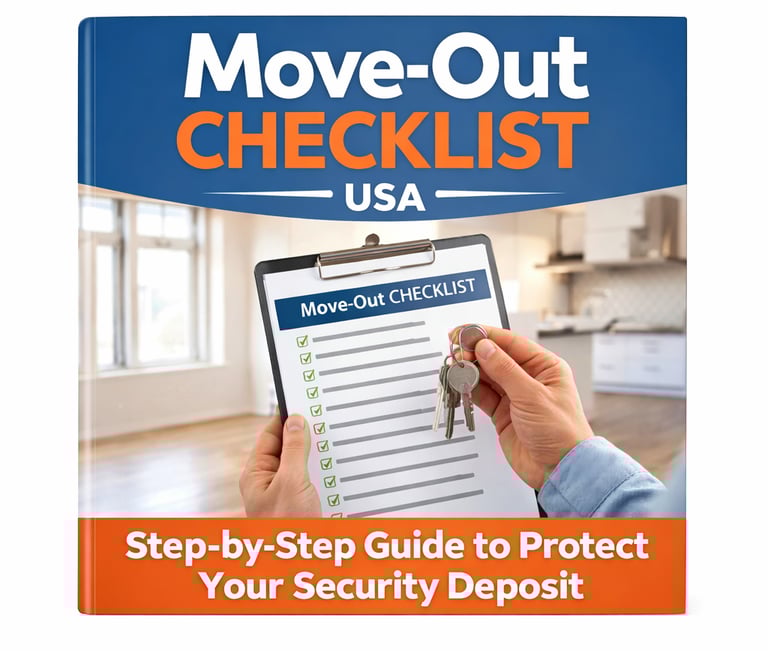
The Move-Out Checklist USA eBook turns moving out into a step-by-step process renters can follow calmly—without wondering what they forgot or what might go wrong.
Many renters say the biggest benefit isn’t just getting their deposit back—it’s how much less stressful the entire move felt.
Final Takeaway
Moving out doesn’t have to be stressful.
Stress comes from uncertainty.
Uncertainty disappears with preparation.
When you follow a clear process, document properly, and track timelines, moving out becomes routine—and your security deposit stops feeling at risk.
Calm beats chaos.
Preparation beats stress.
And once you experience a stress-free move-out, you’ll never do it any other way.https://moveoutchecklistusa.com/move-out-checklist-usa-guide
Help
Questions? Reach out anytime.
Contact
infoebookusa@aol.com
© 2026. All rights reserved.